
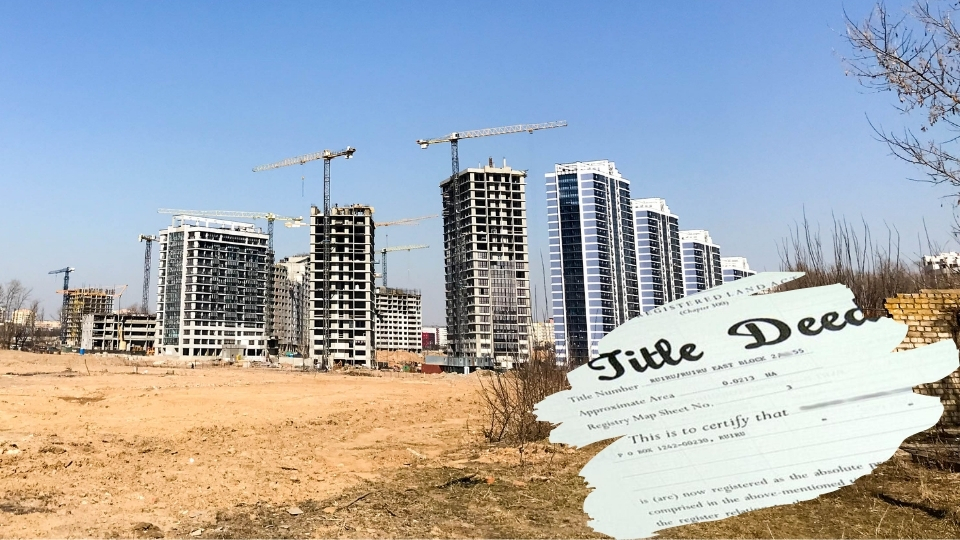
Why Land Ownership Matters More Than the Brochure
One of the first questions investors ask me when considering an off-plan apartment is:
“How do I know this developer actually owns the land?”
It’s an excellent question.
An attractive payment plan, beautiful architectural renders and luxury amenities mean very little if the developer does not have the legal right to build on the land.
Before investing millions of shillings into an off-plan apartment in Nairobi, verifying land ownership should be one of your first due diligence steps.
Why Investors Should Verify Land Ownership
Land disputes remain one of the biggest risks in real estate investment in Kenya.
Projects have stalled because of ownership disputes, court injunctions, succession claims and competing title deeds.
Although these situations are not common among established developers, every investor should understand how to reduce unnecessary risk.
Step 1: Ask to See the Title Deed
A reputable developer should have no issue showing prospective buyers the title deed or providing details of the property’s ownership.
Check:
- Who is listed as the registered owner?
- Does the owner match the developer?
- If not, what legal relationship exists between them?
Sometimes projects are developed through Special Purpose Vehicles (SPVs), joint ventures or development agreements. That isn’t necessarily a concern—but it should be clearly explained.
Step 2: Conduct an Official Land Search
An official search at the Ministry of Lands confirms important details such as:
- Registered ownership
- Existing charges or mortgages
- Caveats or restrictions
- Pending legal interests
This provides independent verification beyond the sales presentation.
Many investors engage a conveyancing advocate to carry out this process on their behalf.
Step 3: Ask Whether the Land Is Freehold or Leasehold
Understanding the tenure helps you evaluate the long-term value of the property.
For leasehold land, consider:
- Remaining lease period
- Renewal provisions
- Conditions attached to the lease
Step 4: Confirm Development Approvals
Ownership alone isn’t enough.
Ask whether the developer has obtained the necessary approvals, including planning permissions and construction approvals from the relevant authorities.
A professionally managed project should have its approvals well documented.
Step 5: Work With Independent Professionals
Buying an off-plan property in Kenya is one of the largest financial decisions many people make.
Having an independent conveyancing advocate review documentation before signing provides valuable peace of mind.
Final Thoughts
Successful investors don’t rely solely on trust.
They verify.
Taking the time to understand land ownership can save years of frustration and protect your investment.
Buying off-plan should be an exciting journey—not a stressful one.
Ready to Invest with Confidence?
If you’re evaluating an off-plan apartment in Nairobi and would like an independent review of the developer, land ownership and project documentation, I’d be happy to help.
Book a personalised consultation, and together we’ll assess whether the opportunity aligns with your investment goals and risk tolerance.